Preparing for your driving test can feel like a big hurdle. You have practiced, studied the rules, and now it is time for the final step. If you’re wondering how to prepare for the Virginia Road, this guide provides everything you need for your Virginia Road Skills Test. We will cover what to expect, share key tips, and highlight common errors so you can feel confident behind the wheel.
With the right preparation, you can pass on your first attempt. This article offers step-by-step advice for your Virginia DMV road test preparation, turning a stressful day into a successful one. For professional guidance and practice, visit Seven Stars Driving School VA to get expert coaching and hands-on experience.
Understanding the Virginia Road Skills Test
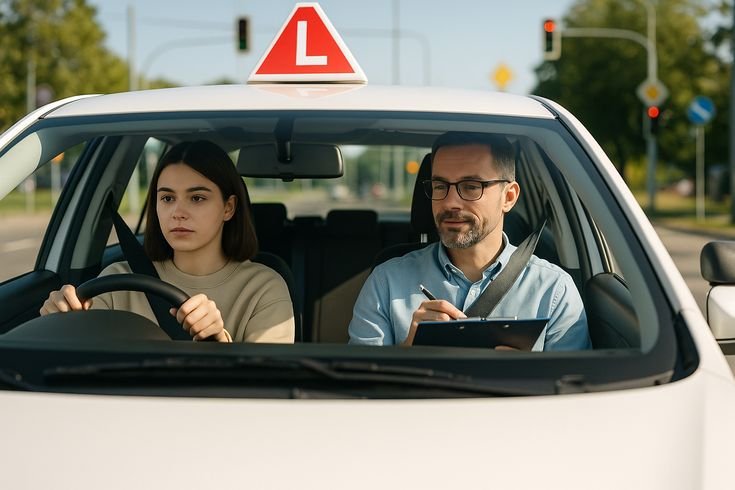
The road skills test in Virginia is designed to evaluate your ability to operate a vehicle safely and responsibly. A DMV examiner will ride with you to observe your driving skills in a real-world setting. They are not trying to trick you; they simply want to confirm you can follow traffic laws and handle common driving situations.
Your test will cover basic and intermediate maneuvers. The goal is to demonstrate competence and safety from the moment you start the car until you park it at the end.
Part One: The Vehicle Safety Checklist
Before you even start driving, the examiner will conduct a pre-drive safety check. You must be able to locate and operate various controls in your vehicle. Failing this portion means your test ends immediately.
You will need to demonstrate you can use the following:
- Headlights (low and high beams)
- Turn signals (left and right)
- Brake lights
- Horn
- Windshield wipers
- Hazard lights (emergency flashers)
- Defroster
Ensure the vehicle you bring is in good working order. Any non-functional equipment, like a broken taillight or a cracked windshield that obstructs your view, can result in an automatic failure.
Part Two: The On-Road Driving Portion
This is the main part of your test. You will drive on public roads, likely in an area near the DMV office. The examiner will give you clear, verbal directions. Your job is to follow them safely while obeying all traffic laws.
Key skills you will be tested on include:
- Starting and stopping smoothly
- Maintaining a safe following distance
- Proper lane usage and changing lanes correctly
- Making left and right turns
- Obeying traffic signs, signals, and road markings
- Backing up in a straight line
- Parking on a hill (if applicable)
- Three-point turns (turnabouts)
How to Pass the Virginia Road Test: A Step-by-Step Plan
Success comes from preparation. Following these steps will significantly increase your chances of passing. Think of this as your personal checklist for how to pass the Virginia road test.
1. Master the Fundamentals
Before you worry about the test itself, ensure your basic driving skills are solid. Practice regularly with a licensed driver. Focus on being smooth with the accelerator and brake. Drive in different conditions—day, night, light rain—to build your confidence.
2. Practice the Specific Test Maneuvers
The Virginia Road Skills Test includes specific maneuvers you might not do every day. Dedicate practice sessions to these key elements:
- Three-Point Turns: Find an empty, safe street to practice this. Focus on checking for traffic constantly. The goal is to complete the turn in three movements efficiently.
- Backing Up: Practice backing up in a straight line for about 50 feet. Look over your right shoulder through the rear window, not just in your mirrors.
- Parking: Practice parallel parking and angle parking. Use cones or other markers to simulate a real space.
3. Study the Virginia Driver’s Manual
The written knowledge test is behind you, but you still need to know the rules of the road. The examiner will be watching to see if you apply them correctly. Review the Virginia Driver’s Manual, paying close attention to:
- Right-of-way rules at intersections.
- Speed limits in different zones (school, residential, business).
- Proper procedures for changing lanes.
- The meaning of all traffic signs and signals.
4. Prepare Your Vehicle and Documents
On test day, you must have a properly registered, insured, and inspected vehicle. Make sure you have all the required documents ready to go. We cover the full list in the FAQ section below. A day or two before your test, double-check that all lights, signals, and horns are working perfectly.
5. Scout the Test Area
If possible, drive around the area near the DMV where you will take your test. You don’t need to know the exact route, but familiarizing yourself with the local speed limits, intersections, and road signs can reduce anxiety. It helps you anticipate what might be asked of you.
Virginia Driving Test Tips for First-Time Success
Knowing what to do is half the battle. Executing it under pressure is the other half. These Virginia driving test tips will help you perform your best.
- Exaggerate Your Head Movements: When you check your mirrors or blind spots, make it obvious. The examiner needs to see that you are actively scanning your surroundings. Turn your head physically, don’t just move your eyes.
- Use Your Turn Signals Every Time: Signal for every turn, every lane change, and even when pulling over to the curb. Signal at least 100 feet before your maneuver.
- Maintain a Safe Following Distance: Use the three-to-four-second rule. When the car ahead of you passes a fixed object (like a signpost), you should be able to count at least “one-thousand-one, one-thousand-two, one-thousand-three” before you pass the same object.
- Come to a Complete Stop: At stop signs and red lights, make sure the car fully stops moving. A “rolling stop” is an automatic error. Count to three in your head before proceeding if it is safe.
- Listen Carefully to Instructions: The examiner will give you directions well in advance. If you do not understand something, it is okay to ask for clarification. Don’t panic if you miss a turn; the examiner will adjust and reroute you. They are testing your driving skill, not your navigation.
Common Mistakes to Avoid
Many test-takers fail for making small, preventable errors. Be aware of these common pitfalls:
- Failing to yield the right-of-way.
- Following another vehicle too closely.
- Changing lanes without checking blind spots.
- Driving too fast for conditions or over the speed limit.
- Driving too slowly or cautiously, impeding the flow of traffic.
- Incorrectly performing a three-point turn.
- Hitting the curb when parking or turning.
Frequently Asked Questions (FAQ)
What documents are required for the Virginia Road Skills Test?
You will need to bring:
- A valid learner’s permit.
- Proof of completion of a driver education course (if applicable).
- A properly registered, insured, and inspected vehicle.
- A licensed driver to accompany you to the DMV.
How long is the test?
The driving portion of the test typically lasts between 15 and 20 minutes. The entire process, including the pre-drive check and final paperwork, may take longer.
What are the most common errors that cause people to fail?
The most frequent critical errors include failing to yield, not stopping completely at stop signs, improper lane changes (especially not checking blind spots), and striking an object or curb. Accumulating too many minor points for things like jerky stops or wide turns can also lead to failure.
Can I use a car with a backup camera?
Yes, you can use a car with a backup camera. However, you cannot rely on it exclusively. The DMV requires you to demonstrate the ability to back up safely by looking over your shoulder and using your mirrors. The camera can be a supplemental tool, but not your primary method.
What happens if I fail the test?
If you fail, the examiner will explain the areas where you need improvement. In Virginia, if you are under 18, you must wait 15 days before you can retake the test. If you are 18 or older, you must wait at least two full days. If you fail three times, you must complete a driver education course before you can take the test again. Use the waiting period to practice the skills you struggled with.