Earning your driver’s license is a major milestone, offering a new level of freedom and independence. As you begin to explore Virginia’s scenic byways and bustling interstates, it’s crucial to build skills that go beyond basic traffic laws. Defensive driving Virginia is the art of anticipating danger and making smart, proactive choices to keep yourself and others safe on the road. Mastering these techniques will not only help you avoid accidents but also build your confidence behind the wheel.
This guide provides practical defensive driving tips tailored specifically for navigating Virginia’s unique roads and weather. You will learn how to spot potential hazards, manage your space effectively, and handle unexpected situations with composure. For hands-on training and expert guidance, consider enrolling at Seven Stars Driving School VA to strengthen your defensive driving skills and gain real-world experience.
The Core of Defensive Driving: Awareness and Anticipation
Defensive driving starts with a simple principle: expect the unexpected. It means staying constantly aware of your surroundings and anticipating the potential actions of other drivers, pedestrians, and cyclists. This proactive mindset is your best defense against collisions.
The Two-Second Rule (and Beyond)
Maintaining a safe following distance is one of the most critical habits you can develop. It gives you enough time to react if the vehicle in front of you brakes suddenly. In ideal conditions, use the “two-second rule.” Watch the vehicle ahead pass a fixed object like a signpost or a tree. Then, start counting “one-thousand-one, one-thousand-two.” If you reach the object before you finish counting, you are following too closely.
In Virginia, conditions are often less than ideal. You should increase your following distance to four seconds or more during heavy rain, fog, or when driving at night. On icy or snowy roads, expanding that distance even further is essential for maintaining control.
Scan, Identify, Predict, Decide, Execute (SIPDE)
SIPDE is a simple, five-step process used by experienced drivers to navigate traffic safely.
- Scan: Continuously scan the entire driving environment. Don’t just focus on the car directly in front of you. Check your mirrors every 5-8 seconds and look far down the road, to the sides, and behind you.
- Identify: Pinpoint potential hazards. This could be a car weaving in its lane, a child chasing a ball near the sidewalk, or a driver who seems distracted.
- Predict: Anticipate what might happen next. That weaving car might make a sudden lane change. The child might dart into the street.
- Decide: Choose the safest course of action to avoid the potential conflict. This might mean slowing down, changing lanes (after signaling and checking your blind spot), or covering your brake.
- Execute: Perform your chosen maneuver smoothly and deliberately.
Navigating Virginia’s Unique Challenges
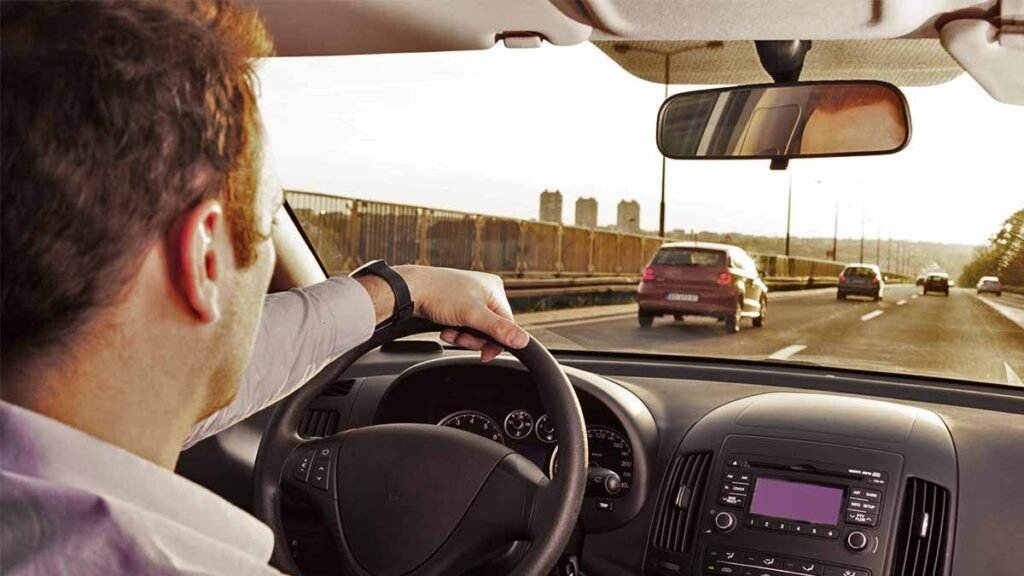
From the crowded highways of Northern Virginia to the winding roads of the Blue Ridge Mountains, the state presents a diverse range of driving environments. Here’s how to handle them defensively.
Handling Inclement Weather
Virginia weather can be unpredictable. Rain, snow, and fog require you to adjust your driving style significantly.
- Driving in Rain: The first few minutes of a rainfall are often the most dangerous, as oil and dust on the road surface mix with water to create slick conditions. Reduce your speed, increase your following distance, and ensure your headlights are on to improve your visibility to others. Avoid using cruise control, as it can reduce your ability to respond to hydroplaning.
- Driving in Snow and Ice: Winter driving demands extreme caution. Accelerate and decelerate slowly to maintain traction. If your wheels begin to spin, ease off the gas. When you need to stop, pump your brakes gently unless you have an anti-lock braking system (ABS), in which case you should apply firm, steady pressure. Be especially careful on bridges and overpasses, as they freeze first.
- Navigating Fog: Dense fog can severely limit visibility. Reduce your speed dramatically and use your low-beam headlights. High beams will reflect off the fog and worsen your visibility. If conditions become too hazardous, pull over to a safe location, turn off your driving lights, and turn on your emergency flashers.
Dealing with Distracted Drivers
In an age of constant connectivity, distracted driving is a major threat. A driver looking at their phone, adjusting the radio, or eating can be just as dangerous as an impaired driver.
Your defense is to create space. If you notice a driver who isn’t paying attention, give them a wide berth. Don’t tailgate them or drive alongside them for an extended period. Assume they may not see you and be prepared to take evasive action, like slowing down or changing lanes, to stay out of their path.
Managing Unexpected Emergencies
Even the most careful driver can face an emergency. Knowing how to respond can prevent a bad situation from becoming a catastrophe.
Tire Blowouts
A sudden tire blowout can be startling. The key is to remain calm and avoid sudden movements.
- Grip the wheel firmly. Your car will pull strongly in the direction of the flat tire.
- Do not slam on the brakes. This can cause you to lose control.
- Gently ease off the accelerator and let the car slow down on its own.
- Steer straight as you slow down.
- Once you have slowed to a safe speed, activate your turn signal and pull over to the shoulder.
Skids and Slides
If your car begins to skid, your instincts might tell you to brake hard, but that’s often the wrong move.
- For a front-wheel skid (understeer): Ease off the accelerator and steer in the direction you want the car to go. As the front tires regain grip, gently straighten the wheel.
- For a rear-wheel skid (oversteer): Turn your steering wheel in the same direction the rear of the car is sliding (this is known as “steering into the skid”). For example, if the back of your car slides to the right, steer to the right. As you feel the car straighten out, begin to counter-steer back to the center.
Wildlife on the Road
Virginia is home to a large deer population, and collisions are common, especially at dawn and dusk. If you see a deer, slow down immediately. Be aware that deer often travel in groups, so if you see one, others are likely nearby. Do not swerve violently to avoid an animal, as this could cause you to lose control and hit another vehicle or a fixed object, resulting in a more serious crash.
Building Confidence Through Practice
Defensive driving is a skill that improves with practice. Every time you get behind the wheel is an opportunity to reinforce good habits. Start with short, familiar routes and gradually challenge yourself with new environments, like highway driving or navigating a busy city center during off-peak hours.
Remember that confidence comes from competence. By focusing on awareness, anticipation, and safe decision-making, you are building a foundation for a lifetime of safe driving. Welcome to the road—you’ve got this.